State of the Unions

Trade unions are more powerful than ever before – just not the ones you’re thinking of

To visit a trade union headquarters is to bask in the familiar nostalgia of a time when men ruled the world, smoking was permitted on tube trains and national strikes were an accepted part of everyday life. They are often run down offices in unfashionable parts of London, with slogans and urgings hanging from every wall. The inhabitants look like chippy council workers, eager to refuse your request to overturn a parking fine.

A visit to the headquarters of the doctor’s union – the British Medical Association – is a somewhat different experience. Situated in Bloomsbury, the glass walls and smartly turned out receptionists remind one of a corporate HQ. The place oozes money – which is unsurprising given its £150M annual revenues

Doctors are part of an elite group of professionals whose unions enjoy special privileges that other, lowlier, unions do not. Solicitors (via the Law Society), Surveyors (via RICS) and many other professions combine a membership, lobbying AND regulatory function allowing them to operate as a closed shop. When the government attempts to institute changes that would be detrimental to them or their members (but almost certainly better for the public), they are resisted or defanged. When the regulatory function for solicitors was removed from the Law Society (to the SRA), the obligation for lawyers to remain members of the Society was not. The Royal Medical colleges with their colossal property portfolios and vast wealth continue to regulate their members as well as provide succour and lobbying to preserve their privileges.

Wealthy, well-educated and powerful, it is unsurprising that these unions remain a closed shop regulating themselves and resistant to change; adamant that their members deserve a job for life, free from the prying eyes of independent regulators. Their ability to divert public and private money to their members’ pockets remains unsurpassed. The NHS may have been the creation of a Labour government, but it was designed and implemented by doctors for the benefit of doctors. Just witness the howls of anguish from the BMA when even minor changes to doctors working conditions are proposed. And try and constrain legal aid to avoid the most egregious abuses and before you know it the woke left are on the streets demanding justice for all. No one thinks to suggest that a barrister might possibly take a pay cut.

The answer to removing the power from these most powerful unions and their members is unlikely to come from politicians or an outraged public. It will most likely come from technology and particularly AI which will encroach on their knowledge and surpass their wisdom. Why would one trust the opinion of a doctor who has seen hundreds of cases, when a computer can tell you the insights from millions and instantly remember the efficacy of different treatments? Why spend years learning every nuance of case law when a bot will do it for you?

Of course, as the technology threatens privilege, the privileged will restrict the technology. Only they will be able to access it and provide the masses with its insights. But eventually, as it disseminates, these professions and their wealthy privileged unions will disappear.
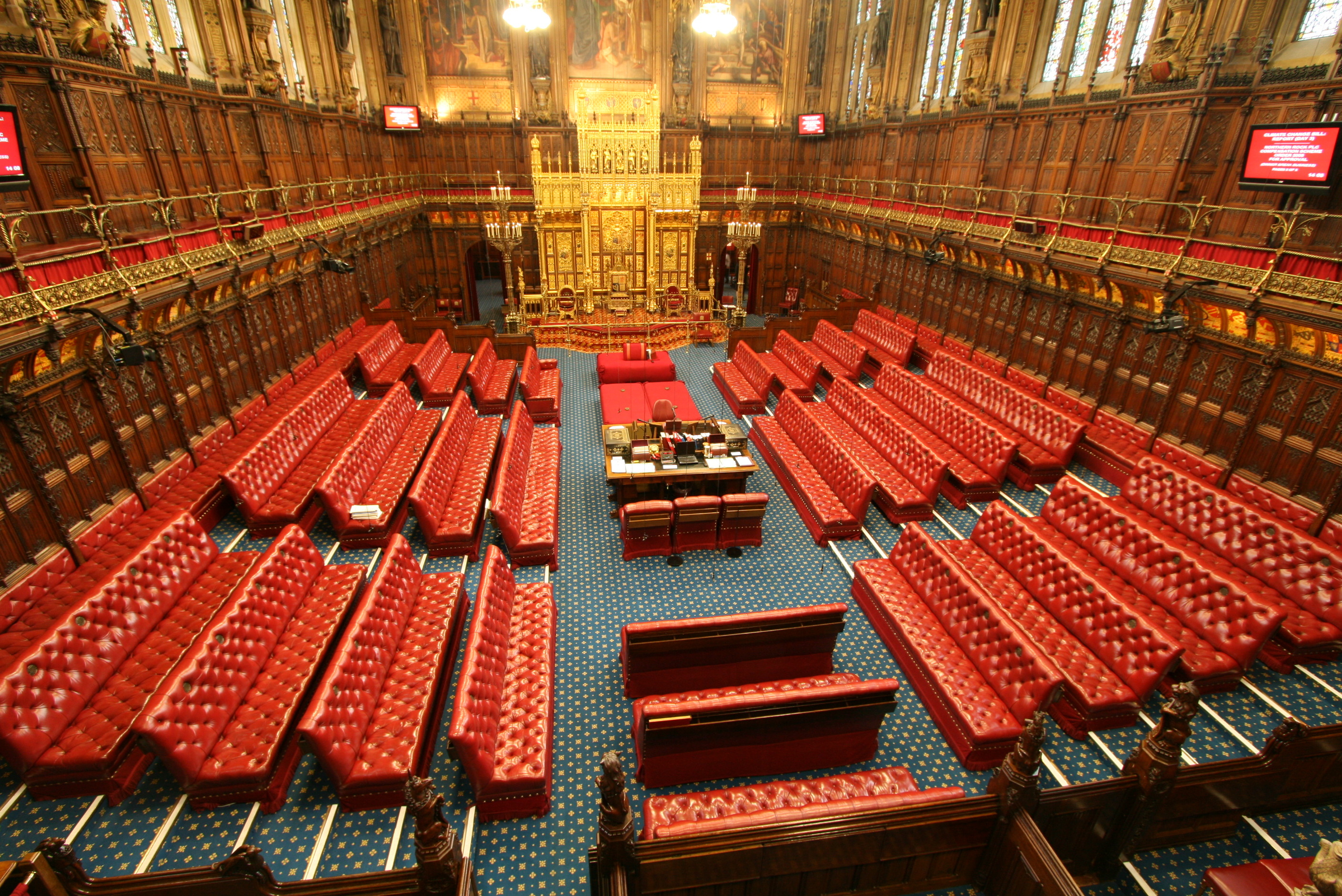
Peerless

house-of-lords.jpg

Richard Askwith’s proposal for replacing the House of Lords is a beautiful one. Like all the best ideas it can be summarised in a few sentences and it seems so sensible, so perfect and so simple that it is surely deserving of support. I quote: “The current peers would be replaced by 400 People’s Peers, randomly conscripted and weighted to be a small, representative sample of the electorate as a whole. Service would be ‘compulsory, well-paid and prestigious’, perhaps even involving ermine and titles.”

And to quote HL Mencken: “there is always a well-known solution to every human problem—neat, plausible, and wrong”. In the case of the People’s Peers the solution is wrong, but not for the reasons Askwith presents himself. Askwith’s principal reason has been given to him by outraged peers and MPs, who point out the loss of expertise from such a scheme. As anyone who has ever spent any time in the Houses of Parliament can confirm, expertise is not the first impression one comes away with. I fully believe that a representative sample of the population would have as much expertise in a particular random subject as almost anyone in our Parliament.

The problem with the proposal is that it is brilliant theoretically, but disastrous practically. And to find the reason for this you only have to look at the one similar compulsory exercise that currently exists – long term jury service.

I spent 8 months on a jury before the trial collapsed. It was a life changing experience. I lost my job as a result of the length of time I was away. I then started a company with two others which we later sold and I became reasonably wealthy. But my main memory of the trial was just how resentful my fellow jurors were to be there.

During the jury selection process, I attempted to avoid the long trial by putting in a fairly detailed document describing my important role at work and what a vital part of the organisation I was. I was one of the first to be called forward by the judge and he read out my self-aggrandising report to the court. He then put the document down, peered over his glasses and asked: “How many people work at this company, Mr Smith”? “About 20,000,” I replied. “And they would all be unable to function in your absence?” he enquired, devastatingly. I was the first juror to be selected.

Other prospective jurors went to greater lengths to avoid the trial. One appeared with a letter from the Chief Executive of Unilever explaining his essential role in selling detergent. Another claimed he was unable to read, despite the fact that he could obviously write. A woman explained she was trying to get pregnant. “How long have you been trying,” asked the judge? “Three years,” came the somewhat sheepish reply.

As the unlucky few were chosen and trudged dejectedly to the jury box, it appeared that we were the ones who had been found guilty and sentenced to a long stretch. And then the trial began. The law prevents me from discussing it, but I believe I can say it was sporadically fascinating (visits from international experts in arcane ephemera one minute, followed by high-class escorts the next) but fundamentally tedious.

Of the 12 jurors, one managed to eject herself after three days by having a mental breakdown. After some debate, an unfortunate reserve juror was dragged in to replace her and the trial restarted. As the case progressed and we sat listening to arcane debates about the law, the resentfulness among the jurors increased. Jurors would arrive late, absence from sickness increased and, most worrying, there was an unwillingness to engage with the process and examine the evidence.

For various unusual reasons in the trial, I was elected foreman quite early. I became more depressed as the notebooks of other jurors filled up with doodles and shopping lists. The only juror who was pleased to be there and engaged with the trial meaningfully had already decided the defendants were guilty and kept passing notes to the judge pointing out their shiftless behaviour or suspicious facts he had found in our evidence pack that he believed the prosecution had missed.

When the trial collapsed with no warning and we were dismissed, we all sat there for a few seconds unable to believe what had happened. We then shuffled out, like the victims of an accident and went back to our lives. Or in my case to a job that had been handed to someone else and a redundancy notice.

All of these problems – an unwillingness to participate, resentfulness at being unable to withdraw from the process, disinterest in the relevant subjects would be magnified several times over in the People’s Chamber. And there would be many other issues: Would you compel someone to serve who has just given birth? What if someone developed a serious mental health issue during their tenure? Would someone who ran a small business be forced to shut it down and layoff their workers? Would someone who refused to participate be thrown in jail? Etc etc etc.

People would also seek to avoid selection in the same way they do for jury service, with the very real issue that the People’s Peers could become self-selecting. We could end up with a group of people very similar to those that carry out the job now. People with time and/or resources and/or partisan views– not the hard-working, honest, everyday folk that Askwith wants to represent us.

It is easy to look at our current systems of government with their endless indecision and inability to reach consensus and despair. But the answer is surely not to centralise matters further with a randomly selected group of disinterested people compelled to attend. Spread the love – get rid of the second chamber and devolve the majority of law review and rework to local chambers that can adapt them to suit their own local needs. A peerless solution, surely?

About Faith

Jeremy-Corbyn_halo

The rise of Jeremy Corbyn and the left in the UK recently has been fascinating. Most of my friends are of the left or at least casual Labour party supporters. A number of them have been alarmed or disheartened but most have been excited. For many of a certain age, it is a trip down memory lane – the happy days of student protest and Red Wedge. For youngsters, it is finally someone that speaks their language of liberty and equality (ignoring that those two ideals are mutually exclusive.)

It is also notable that the same subset of friends all loudly declare their atheism. Atheism is de rigeur at the moment and seems to have acquired a cachet and coolness that it lacked in my youth. People post pictures of themselves brandishing copies of the Origin of Species with the hashtag #atheistlives, something which might have rather alarmed Charles Darwin. I came to atheism in my late teens – I desperately wanted to believe in God, but the universe only made sense to me when you removed God. If an omnipotent being really existed, surely it wouldn’t be so cack-handed in its management.

The idealism of the Cobynistas and their belief in a white-bearded deity who will bring peace and justice to all humanity seems to have a rather touching overlap with my original belief in God. I wonder if it demonstrates that most of us need to believe in something that defies all objective analysis. My friends who have embraced the absence of God have found they need something else to fill the space God occupied and placed Jeremy Corbyn there. The rituals and prayers of the faithful have become rallies and Facebook posts.

As with God, no matter how much I want to, I can’t believe in socialism. Socialism, at least the sort espoused by Jeremy Corbyn, has never succeeded anywhere in the world. It is a brilliant, perfect theory that is disastrous in practice. It doesn’t work because ultimately it relies on trust; if you have faith that your fellow workers will all do their bit and everyone will work for the greater good, you will too. This is why you can have a socialist village, where everyone knows each other and slackers can be identified and called out. But you can’t have a socialist town as you can never be certain that someone you don’t know is doing what they should be. And without that direct connection, you substitute trust for rules and rules are enforced by the state and the state becomes an authoritarian regime that allows no dissent.

I hope I am wrong and when I die I find that God is there ready to lead me to a better place (or at least not shove me towards the fiery pit.) I also hope that if Labour win the next election it ushers in an era of full employment and a fairer, freer society. But I’m not putting my faith in it.